Film directors:
Alfred Hitchcock:
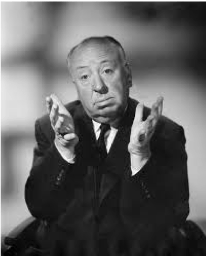
Alfred Hitchcock was an English film director and producer mostly recognised for
his film “Psycho” (1960) along with films “Rear Window’” (1954), “Vertigo”
(1958) and “I confess” (1953). He established many elements of the suspense in the thriller genres exclusively psychological thriller films. Furthermore, Hitchcock’s unique artistic trademarks incorporate the use of camera movement that imitators a person’s gaze; pushing the narrative for viewers to participate in a form of voyeurism.
Furthermore, this keeps the audiences enticed by still have a chance of being
surprised whereas they could have more time to sit in suspense throughout the
film. In one way or another Hitchcock was recognised as the “master of suspense”
(in the New York times review on the web April 30 1980) director for suspense with
his techniques of manipulating then creating the sense of fear in the audience. He
was known for his “expert and unrivaled control of pace and suspense throughout
his films too” (new world encyclopedia). Also, technical innovations with movies
by challenging himself with new technology to deliver accurately what he wanted
the audience to feel and comprehend.
Nonetheless, he framed shots to amplify fear, anxiety, paranoia and empathy, also
Hitchcock used innovative methods of film editing made his thriller films more
gripping. He shined in his narrative by harshly withholding key information from
his characters as well from the audience with engaging the emotions of the
audience like no one else. prevents making the audiences annoyed by giving them
some hints of information that the characters in the movies have no idea what’s going on.
Christopher Nolan:
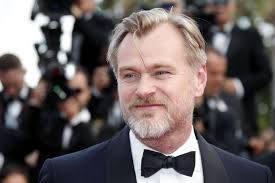
Christopher Nolan is an English-American film director, cinematography,
screenwriter, producer and editor. He is acknowledged for directing the thriller
films “memento”, “Insomnia”, “Inception” as well as “The prestige”. Additionally,
Nolan’s films are embedded in sociological, philosophical and ethical concepts, by
exploring human morality, the structure and building of time, furthermore one’s
personal identity and lastly the susceptible nature of people’s memory.
His body of work is renowned by complex plots, non-linear storytelling, solipsist
perspective, practical special effects, and parallel relationships between narrative
as well as visual language.
Nolan’s visual style regularly focuses attention on urban settings, men in suits,
muted colors, dialogue scenes framed in wide close-up and modern locations and
architecture. He occasionally uses editing as a way to represent the characters’
psychological states merging with subjectivity towards the audience. Likewise
uses darkness, light, and the juxtaposition of those things to indication character
growth, decline and observation. Nolan makes unlimited use of flashbacks as well
flash-forwards to enhance further depth through explanation in his non-linear storylines.
Roman Polanski:
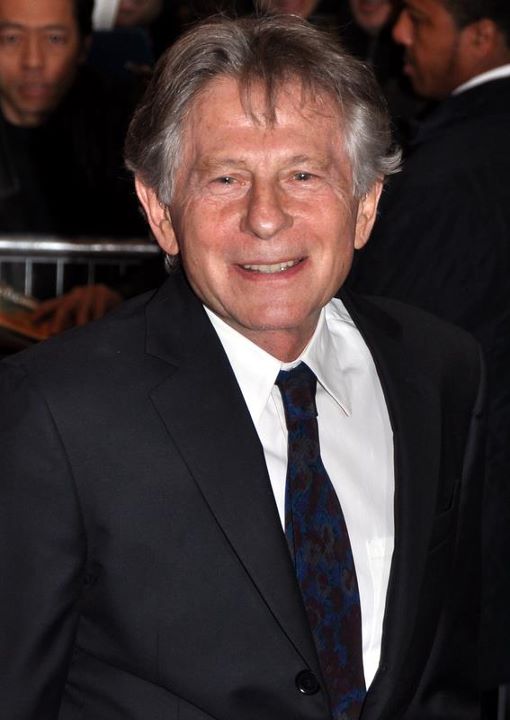
Roman original name Raymond Thierry Liebling is a French-Polish film director,
producer, writer, and actor. He is well celebrated for directing Knife in the
Water (1962) Polanski’s first feature-length film was made in Poland and was
nominated for a United States Academy Award for Best Foreign Language Film.
He has in the UK directed three films, beginning with Repulsion (1965); cemented his position by directing the horror film Rosemary’s Baby (1968), Chinatown (1974), won France’s César Awards
for Best Picture and Best Director, and received three Oscars.
Polanski’s work might be seen as an attempt to map out the clear-cut relationship
between the contemporary world’s instability as well tendency to violence and the
individual’s increasing inability to rise by overcoming his isolation by locating
some realm of meaning or value beyond himself. He has consistently shown more
interest in holding up a mirror to the individual impulses, unconscious urges/vices,
and the personal psychoses of human life than in dissecting the different social and
political forces he has observed.
Few film makers have experienced such interaction between their personal and
artistic life as Roman Polanski. Profoundly marked by the nightmares of his
childhood in the ghetto of Krakow, during which he witnessed the death of his
mother, Polanski created a body of work intimately close to his life. Polanski’s
films obsessively explore the themes of insanity, horror and paranoia, possibly an
attempt to exorcise his demons. Yet, beyond these fiery tones, there are profound
and intelligent political messages in all Polanski’s work. Polanski never lost his
freedom and identity, and never made a victim of himself, rather preferring to
analyse the zeitgeist of his epoch with a keen and subtle eye.
Polanski’s feature debut knife in the water (1962), which was nominated for the
Best Foreign Language Film Oscar, is a tense psychosexual thriller about two men
competing for the same woman. After a bourgeois couple driving to a lake nearly
knocks down a handsome hitchhiker, they bring him along for a day in their boat.
The materialistic older man patronizes and goads the young stranger, a student,however
it is the bikinicladwife who makes the decision that brings about a shift in the
Darwinian social order.
 Media Studies As Project